
A recreation involving brief unconsciousness, used primarily to dodge responsibilities, emails, and the emotional inconveniences of being awake. Some call it “rest.” Real indolents know it’s just time travel to your next meal.
Whether horizontal, vertical, or mid-sentence, napping is the seasoned loafers' hobby of choice — a way to reject hustle culture with your eyes closed.
WHAT YOU'LL NEED:
PROS:
CONS:
Set an alarm with a deeply unhelpful label like “???” or “You’re Late (For Something)”. When it goes off, wake up just enough to feel briefly alarmed, then turn it off and go back to sleep. This adds stakes, narrative tension, and a false sense of productivity to your nap—without requiring follow-through.
Difficulty Level: Beginner. Advanced practitioners may nap accidentally while intending to “just rest their eyes.”
Time Commitment: Advertised as 20 minutes. Realistically ranges from 8 minutes to “what year is it?”
Skill Transferability: High. Directly applicable to meetings, public transit, couches at other people’s houses, and any room with a mild hum.
Cost Over Time: Low. May require a blanket acquisition phase or a long-term investment in “nap clothes” that look intentional but aren’t.
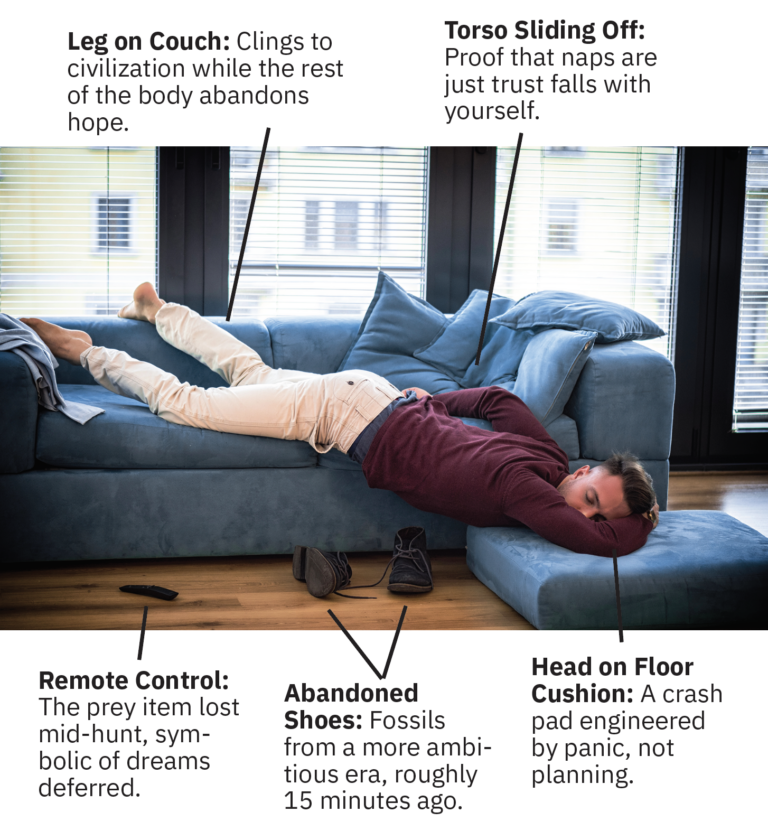
aka The Couch Waterfall
Why fight physics when you can let your body slide into sleep like a dropped lasagna?
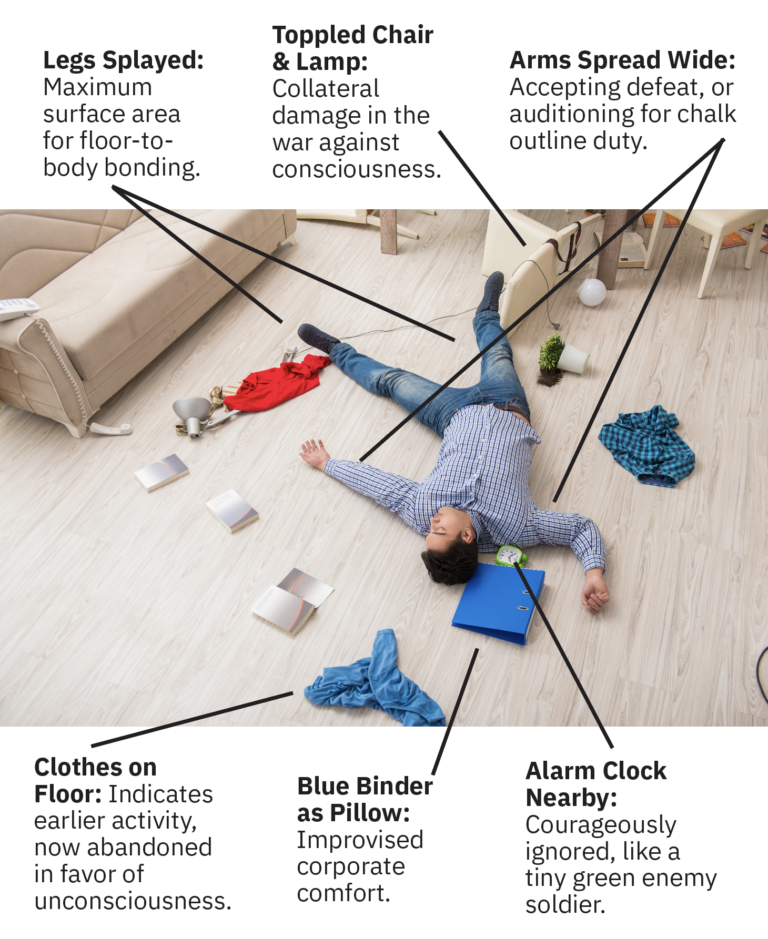
aka The Human Crime Scene
Sometimes rest isn’t chosen — it just tackles you mid-task and leaves the evidence scattered like an episode of CSI: Pajamas.
Naps taken after 2:00 p.m. are 3.1× more likely to cause confusion about the day of the week upon waking.
Archaeologists point to 12,000 BCE, when a caveman named Drogg invented the first “fence.” Not to keep predators out, but to keep himself in. After building a crude cage around his favorite napping rock, Drogg could finally snooze without sleepwalking into a saber-toothed tiger’s mouth. Scholars agree this marked the dawn of both personal security systems and humanity’s lifelong commitment to unnecessary over-engineering for the sake of a nap.